Finding home: why veteran-specific homelessness support matters
7 July 2026
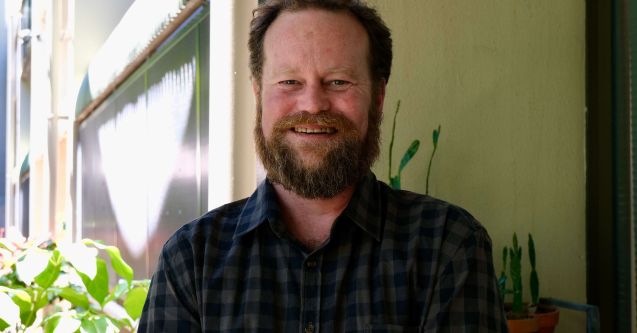
“You can’t look for a job when you don’t even know where you’re sleeping that night. You can’t plan for the future when you’re constantly stuck in survival mode.”
— Michael, defence veteran
People experiencing homelessness often face overlapping challenges including trauma, addiction and a lack of secure accommodation. For Australian Defence Force (ADF) veterans, those challenges can become even more complex when transitioning from service to civilian life.
The Salvation Army’s Veteran Support Team currently provides housing assistance in Queensland for former Australian Defence Force members experiencing homelessness or who are at risk of homelessness. The program works alongside participants to overcome barriers to finding and maintaining safe and stable housing.
Why ADF veterans face higher risks of homelessness
Transitioning from military to civilian life can bring unique challenges. Research suggests veterans who have transitioned from the ADF are nearly three times more likely to experience homelessness than the broader Australian population.
Jonathan Dyer, Program Manager of The Salvation Army’s Veteran Support Team, which provides ADF transition support for housing and homelessness, says many veterans face a combination of personal, financial and transition-related pressures after leaving defence.
“You’ve got general things like mental health, maybe substance use, low income — the kinds of challenges many people experience. But layered on top of that are military and transition risk factors,” he explains.
“The two biggest risk factors we see are relationship breakdown and unemployment following transition.
“A common path can be that someone transitions out of defence, possibly into employment, and then their mental health or other pressures start catching up. That affects work, it affects relationships and then factors begin to stack up.”
If you or someone you know is experiencing homelessness or housing stress, services are available.
Michael’s story: overcoming post military service separation, trauma and homelessness
Michael, who was eventually supported by the Veteran Support Team, grew up in Western Sydney before joining the Army at 19.
“I spent four years serving, and in 2011 and 2012, I was deployed to Afghanistan. That experience changed a lot for me,” he says.
Life back in Australia proved difficult. Struggles with addiction and homelessness grew, and, before long, every day was simply about getting through.
“You can’t look for a job when you don’t even know where you’re sleeping that night,” he says. “You can’t plan for the future when you’re constantly stuck in survival mode.
“From that point on, life just kept spiralling. It’s been over ten years ... of being in and out of homelessness, on and off drugs, and in and out of prison. Four times in prison, to be exact,” Michael shares.
“Every time I got out of jail, I had nowhere to go. No home, no stability — straight back to the streets. And from there, addiction was almost inevitable.”
A turning point
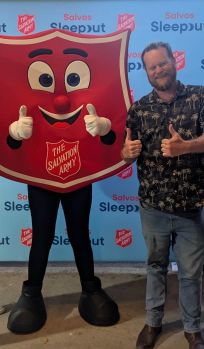 Access to stable accommodation through support from The Salvation Army marked a turning point for Michael.
“Having somewhere to go changed everything,” he says. “It gave me that stepping stone between addiction and getting back on my feet. I could actually think about the future instead of just surviving day to day.”
With stable housing came the chance to rebuild.
“I got my forklift licence, found work, and started rebuilding my life.”
Michael is now securely housed, working and, he says, most importantly of all, reconnecting with his child.
“Having a job is huge for me. It gives me control over my life. It gives me confidence. Without it, I wouldn’t be able to keep my place, and the risk of relapsing would be so much higher.
“For the first time in a long time, I actually feel like I’m in control of my future.”
Explaining why he chose to share his story using his real name to encourage others, Michael says, “Growing up as the seventh child in a large family, I was often just called ‘seven’. In the Army, I was another number. But now, in telling my story here, I choose to be known by my name, Michael.”
Why veteran-specific support matters
Jonathan explains that another common challenge faced by many veterans is leaving the structure of defence life without the practical foundations needed to navigate things like civilian housing systems.
“If you’ve lived on base for years and don’t have a rental history or references, how do you even begin?” he says. “And if you’ve been paying subsidised rent and suddenly you’re looking at full market prices — that’s a huge adjustment.”
He describes The Salvation Army’s Veteran Support Team as “a bridge between the housing and homelessness sector and the veteran support sector”, helping people work through both immediate housing needs and the broader challenges affecting their lives.
“We provide housing-focused case management, so housing is always front of mind. But housing is only one piece of the broader puzzle,” he says. “We take the time to make sure people are seen, heard and valued for who they are.”
Support to end veteran homelessness — for good
The Veteran Support Team can also connect veterans to additional support including budgeting assistance, mental health services and addiction recovery programs to help address other factors that may impact their ability to secure and maintain stable housing.
“When people leave defence, their identity and purpose shifts completely. People often really struggle with that,” Jonathan says.
“Veterans and veteran families really benefit from specific support services. Our mission is to end veteran homelessness.
“It’s complex, but it’s also really simple.”
Ending veteran homelessness — and ultimately all homelessness — requires more than housing alone. It takes coordinated support, long-term commitment and lasting solutions. Let's work to end homelessness together, for good. Learn more about how you can partner with The Salvation Army to advocate for change.
Key facts: Veteran homelessness statistics in Australia
- Veterans who have transitioned from the ADF are nearly three times more likely to experience homelessness than the broader Australian population
- An estimated 5,800 veterans who have transitioned from the ADF experience homelessness each year
Source: AIHW
Salvation Army Veteran Support Team (Queensland)
- Specialist support service for former ADF members and their families in Queensland, offering:
- Housing support, case management and outreach
- Connection to health, employment and broader veteran services