Reducing homelessness after incarceration in NSW: a culturally informed approach
7 July 2026
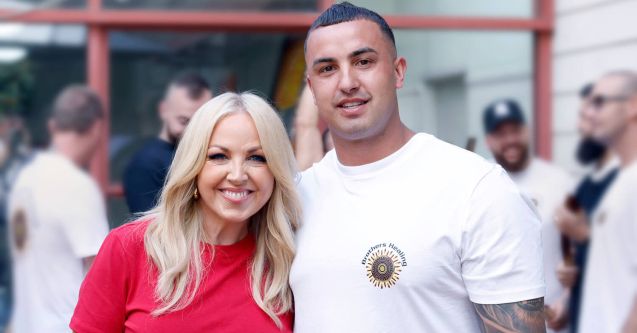
A culturally informed Salvation Army program in New South Wales is helping reduce homelessness after incarceration by supporting Aboriginal and Torres Strait Islander men before and after release from custody.
One of the most entrenched pathways into homelessness is release from incarceration, with almost half of all people leaving prison expecting to be homeless. In New South Wales, a program nearing the end of its first year is already promising outcomes in reducing homelessness among men leaving custody
The ‘Brothers Healing’ program combines post-release housing support in NSW, cultural connection and workers who have their own lived experience, to help Aboriginal and Torres Strait Islander men transition from custody into stable housing and community connection.
Delivered with support from ‘More Cultural Rehabs, Less Gaols’, Brothers Healing works in and alongside Cessnock Correctional Centre, responding to a critical gap where support too often ends at the prison gate.
The history and model of Salvation Army prison ministry care
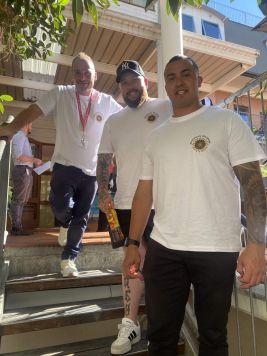 This work continues The Salvation Army’s long history of prison ministry, which began in Melbourne in 1883 through what became known as the Prison Gate Brigade, supporting people as they left custody and reintegrated into the community.
The Brothers Healing program uses a peer-supported model that combines case management with lived experience, supporting participants through a peer support worker and program manager whose own experiences and cultural understanding help shape support grounded in connection, trust and shared understanding.
Case manager Kaine Duroux, a Bundjalung and Gumbaynggirr man from Grafton who lives on Darkinjung Country on the Central Coast and works on Wonnarua Country in Cessnock, says the program supports men through both practical case management and cultural connection.
“Case management focuses on housing, supporting men to sustain housing and ongoing tenancy,” Kaine says. “That might include mental health, drug and alcohol support, or reconnecting with family.”
That work begins inside custody, where building trust is critical.
“We go into Cessnock Correctional Centre and run men’s groups,” he says. “A lot of these men have been labelled, so we start to build trust, strip those labels away and allow them to reflect on what they’ve been through.”
Support continues in community and on Country, with a strong cultural focus.
“We run groups in the community, go out on Country and connect with other men’s groups across NSW,” Kaine says. “Spending time with Elders and learning from them strengthens identity and connection.”
Learn more about how you can access help and as a community, how we can work to end homelessness in Australia — for good.
Brothers Healing was developed to address a long-standing disconnection between incarceration and housing stability, a key driver of homelessness after release.
Kristie Clifton, State Manager, Homelessness NSW/ACT for The Salvation Army, says the program takes a culturally informed, trauma-aware approach, specifically designed to support Aboriginal and Torres Strait Islander men.
“It provides culturally respectful, trauma-informed support that focuses on building trust and strengthening identity and community connection,” she says.
“Aboriginal and Torres Strait Islander peoples are significantly overrepresented in the justice system, and this is a pathway out.”
For many leaving incarceration, the first days are critical and often unsupported. Brothers Healing begins engagement before release and continues that support into the community.
“We go into Cessnock every week and start working with the men before release,” Kristie says. “So when they come out, they’re not starting from zero.”
Why peer support is critical for Aboriginal and Torres Strait Islander men after incarceration
Peer support is central to Brothers Healing, helping break down barriers to engagement.
“These men can connect with someone who’s been there, felt what they have felt,” Kaine says. “That builds trust.
“Our men are impacted by intergenerational trauma which creates disconnection, loss of identity and belonging. Our peer support workers are a true reflection that change is possible, and this builds hope for our men.”
Support continues beyond release in practical ways, including transport to accommodation, rehabilitation and other services, which Kaine explains as a “ripple effect” for the whole community.
Create positive change in your community by partnering with The Salvation Army.
Kaine says outcomes vary, but the program is already seeing positive change, both big and small. “We’ve journeyed with a guy in one of our transitional properties through the Brothers Healing program. He’s really turned his life around.
“He’s got a job, a licence, a car and he’s reconnected with his child, who he hadn’t seen for some time. From where he thought he would be to where he is now, it is a good outcome,” he says.
Kaine explains those outcomes need to be understood in context, and that change often takes time and needs long-term support.
“These men often didn’t have a great start to their lives. It’s intergenerational trauma. It’s racism, it’s those labels,” Kaine says.
“They’re stuck in that cycle of trauma responses, and when you don’t know any different, you can’t project any differently. So it’s about creating safety and giving men the space to be heard, feel and begin to heal.”
Passion from experience
For Kaine, the work is grounded in his own experience of growing up around addiction and violence and the impact that had on his identity and belonging.
He went on to work in the areas of mental health and suicide prevention, before helping develop and implement The Salvation Army’s Brothers Healing program.
He says reconnecting with culture has been central to that positive shift in his own life.
“Growing up I felt different, like I didn’t belong,” Kaine explains. “The more I leaned into my culture, the more strength I felt about myself as a man.”
That experience now shapes how Kaine supports others.
“I know there are so many men who are struggling with their identity and who they are,” he says. “That’s why I’m passionate about Brothers Healing.”
Early signs are promising, with the program expected to support well over 100 participants in its first year.
As a unique program, already gaining traction, Kristie and Kaine dream of seeing it expand.
“We want to model this across NSW and across the country. It is an essential need within our communities,” Kristie says.
Fast facts: Brothers Healing (NSW)
- Supports Aboriginal and Torres Strait Islander men before and after release from custody
- Delivered by The Salvation Army with support from More Cultural Rehabs, Less Gaols
- Works in and alongside Cessnock Correctional Centre, continuing support into the community
- Combines case management, cultural connection and lived experience support
- Addresses underlying drivers of homelessness including trauma, disconnection and systemic barriers
- Focuses on sustaining housing, not just securing it
- Built on a culturally safe model prioritising identity, trust and long-term connection
- Early outcomes include stronger engagement, improved housing stability and reduced risk of reoffending