Salvos long history of serving service personnel
7 November 2025
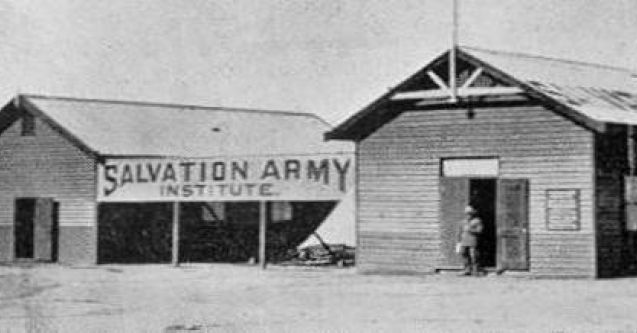
Did you know that Salvation Army Red Shield Defence Services (RSDS) representatives are currently supporting Australian Defence Force (ADF) personnel at Holsworthy Barracks in Sydney, Enoggera Barracks in Brisbane, Lavarack Barracks in Townsville, Robertson Barracks in Darwin, the Royal Military College Duntroon in Canberra, and more?
In 1899, with the outbreak of the Boer War, it first became apparent to Salvation Army General William Booth that there was a need to offer care to service personnel on both sides of the conflict, so he appointed Salvation Army Adjutant Mary Murray to organise support.
This began a tradition of The Salvation Army coming alongside the military in times of peace and conflict to offer emotional and spiritual care.
Evolution of serving those who serve
Today’s Red Shield Defence Services (RSDS) has evolved over many years.
Salvation Army historian, author and museum manager Lindsay Cox, explains that in Australia, The Salvation Army established The War Services Department in 1914, then The Red Shield War Services (RSWS) in 1939. The Red Shield Defence Services (RSDS) was established in Australia after the Vietnam War – post 1976.
“The red shield (and blue shield) was not officially adopted in World War One, although in France it was spasmodically used on Welfare Huts. It became officially used in World War Two,” he explains.
Care and courage

Many Salvation Army personnel, including officer-nurses supported troops near the battlefield, in military field hospitals and on the home front – including Salvos’ Brigadier Georgina Collins, one of nine Australian nurses from The Salvation Army Bethesda Hospital in Melbourne who famously served in Egypt and France.
While there were countless acts of sacrifice and courage, by so many, Chaplain-Major William “Fighting Mac” McKenzie became a famous Salvation Army wartime chaplain of this time.
On one occasion he buried 647 ANZACS over three days and nights, close to enemy trenches and with bullets flying around him. He was awarded the Military Cross for his services and was also the first Australian to receive The Salvation Army’s highest honour – The Order of the Founder – for his war work.
Wife of a Salvation Army General, Minnie Carpenter recorded that: "Chaplain McKenzie made Christ real to thousands of men. Up and down the fire-swept ridges he followed them, carrying food and water, tramping miles for their mail; by night cutting steps over treacherous patches which the boys must travel in the morning, praying with them, helping them to live, supporting them as they died. Burying literally hundreds of brave lads fallen in battle, he spent far into the night in his dim dugout, writing to their relatives."
War time care
In World War Two, in North Africa, Syria, (then) New Guinea and the Pacific, the Salvos ‘cuppa’, paper to write letters home and other comforts at ‘Hop In’ centres became even more legendary, with more than 300 Salvation Army (then) RSWS representatives caring for Australian troops.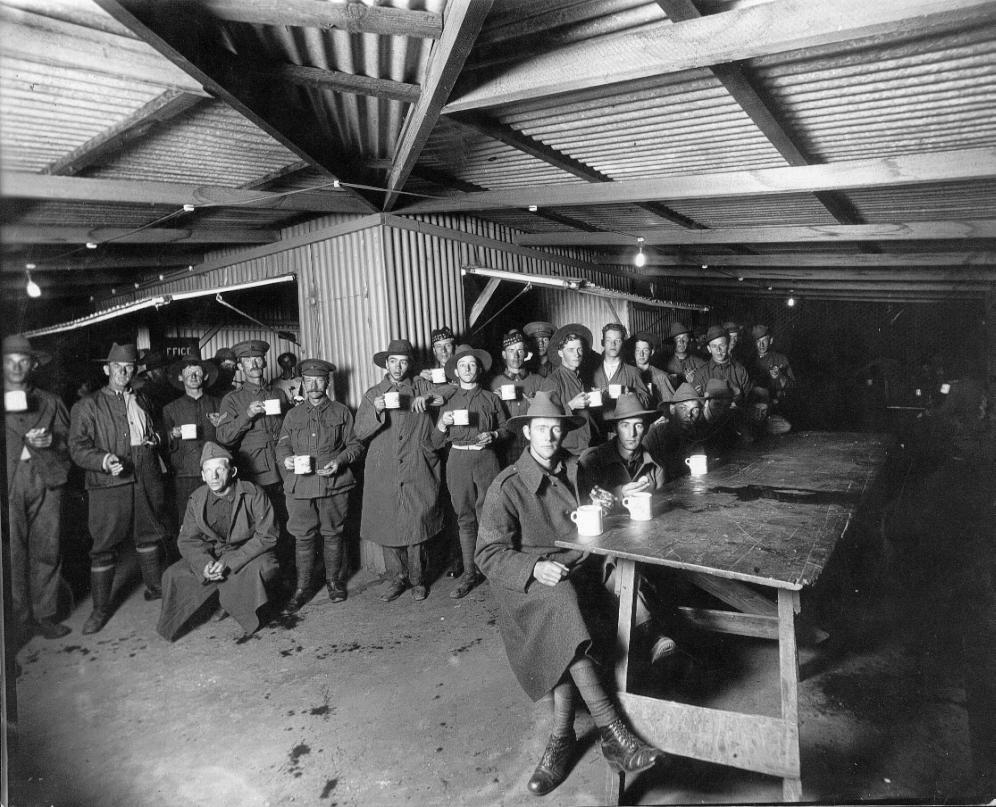
Salvation Army Lieut-Colonel Marjory Scoble, a nursing sister also from Bethesda, served during World War Two, receiving six medals including the Africa Star and the Pacific Star.
This war produced many more RSWS Representatives and others who became famous for bravery and care, including another famous ‘Mac’ – Brigadier Sir Arthur McIlveen.
Immediately following World War One, as Salvation Army Officers, Arthur and wife Elizabeth were appointed to the NSW Central West, to Dubbo Corps, where they ministered to victims of the pneumonic plague, being spread by returning soldiers.
Because of their selfless ministry, Arthur and Elizabeth were given a tumultuous farewell in 1921 when they left Dubbo years later.
Off to support the troops
When World War Two broke out, despite being 53 years of age, in May 1940, Arthur sailed with members of the 18th Brigade, AIF, arriving in Egypt in December of that year.
Appointed as an unofficial OPD (Other Protestant Denominations) padre as well as RSWS Representative to the 2/9th Battalion, Arthur soon found himself bunkered down in the siege of Tobruk.
In his biography of Arthur McIlveen, Nelson Dunster records Arthur’s words: “Smothered with dust, pestered by fleas and flies, famished with thirst, sometimes tightening belts and at others devouring food permeated with dirt, bombed and shelled, weary and sleep-starved, the garrison grimly and defiantly held on. The Salvation Army had the matchless privilege of ministering to those heroes.”
Highest honours awarded
In 1967, Arthur was also awarded The Salvation Army’s highest honour, The Order of the Founder, and in 1970, received a knighthood as a Knight Bachelor of the British Empire for distinguished services to servicemen and ex-servicemen.
Following the war, the ‘Rats of Tobruk’ purchased a retirement cottage and wrote: “You had little to give, yet your constant smile, faith in victory, courage and complete disregard of your own comfort at all times, your humility, self-effacement and driving force took you far beyond the call of extraordinary duty”.
In the following years Australian RSDS representatives have supported Australian troops in Vietnam, Korea, Timor-Leste and more. Sometimes the care was profound, sometimes simple. A member of the 39th Battalion recounting his experiences in World War Two said: “I know the nicest thing I ever had on the Kokoda Trail was a cup of tea given to me by the Salvation Army. And I hated tea that never had milk or sugar in it; this didn't have any in it and I loved it, I wanted more. I had half a cup, that's all they had. I never forgot that one.”
To learn more about Major William McKenzie, visit: https://www.salvationarmy.org.au/about-us/news-and-stories/stories/the-story-of-wwi-salvo-chaplain-fighting-mac/
To learn more about Brigadier Sir Arthur William McIlveen, visit: https://others.org.au/army-archives/from-bushcamp-to-battlefield/