A friend in crisis: inside chaplaincy at Melbourne's Gateways homelessness service
7 July 2026
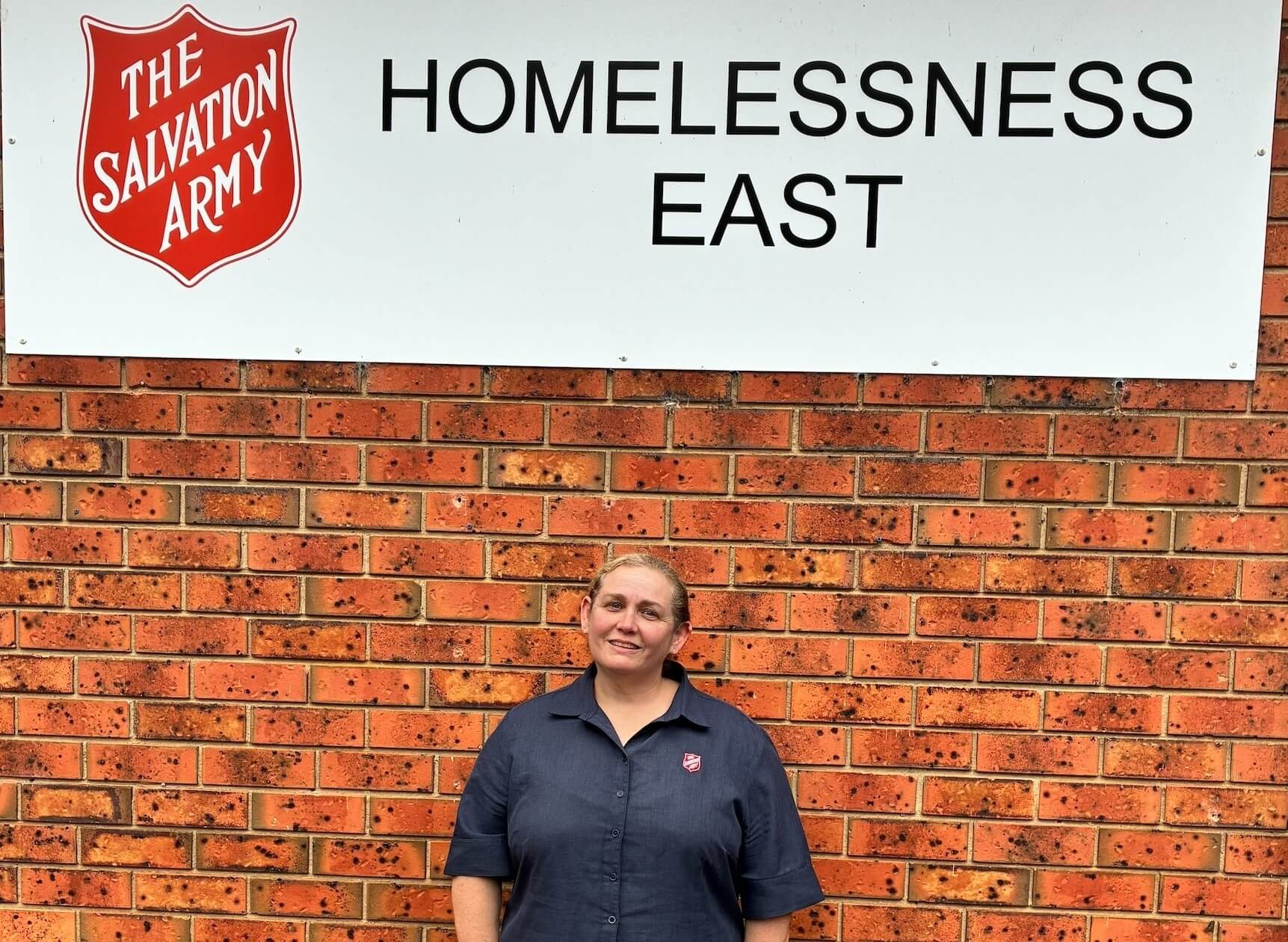
Before there is a bed in crisis accommodation, there is often a long story of loss and grief. For many arriving at The Salvation Army’s Gateways homelessness service in Melbourne, a lifetime of possessions has been reduced to a single bag — or disappeared altogether. Yet the heaviest burdens are often unseen: trauma, grief and uncertainty about what comes next.
Gateways provides short-term crisis accommodation and homelessness support, helping people access essential services, find stability and move towards longer-term housing. Alongside crisis accommodation and case management, chaplaincy forms part of that support.
Connecting crisis accommodation with community care in Victoria
Gateways forms part of The Salvation Army’s broader homelessness support network across Melbourne and Victoria. Across the network, services support individuals, couples and families facing homelessness, housing instability and financial hardship.
The service also works in partnership with other Salvation Army homelessness and community support programs across Victoria, including Flagstaff Crisis Accommodation, Doorways emergency relief and Moneycare free financial counselling.
“All the community members that come into the program are in primary homelessness,” says manager Leanne Foster. “At times we have people who only have the clothes on their back.”
“Every person has their own story, their own experiences and their own trauma,” Leanne says. “We have a very experienced case management team. They get alongside community members, referring them for appropriate services depending on individual needs.”
This may also include help accessing mental health support, alcohol and other drug services, family violence support or financial counselling.
If you know anyone who is feeling insecure about their housing, or needs someone to talk to about their situation, The Salvation Army provides homelessness support services and financial counselling, emergency relief and financial assistance.
Chaplaincy forms part of Gateways' broader response to homelessness, offering practical support as well as a listening ear, compassionate presence and spiritual care for those who want it.
“Having that chaplaincy support alongside case management means we’re able to walk alongside people in a holistic way,” Leanne says.
How chaplaincy, shared spaces and community meals build trust
Victorian Salvos chaplaincy leader Les Smith explains chaplaincy works alongside other support services while providing space for emotional and spiritual care.
“Chaplains and social programs staff work together to provide holistic care that considers the physical, emotional and spiritual needs of individuals,” Les says. “While chaplains have a distinct spiritual focus, that work is supported by the broader team.”
He says people may feel comfortable sharing personal information with chaplains that they do not initially disclose elsewhere. With permission, chaplains can help connect that information back into broader care and support.
“As chaplains we listen without judgement,” Les says. “We’re not there to plan, advise or counsel. Our role is to be available, to listen and to be present,” he says.
Chaplains and staff at Gateways also strive to provide opportunities for connection through shared activities. They run a weekly breakfast program, while a regular community kitchen brings people together in a more informal setting.
Additionally, local Salvation Army corps (church), Mooroolbark Salvos, provides a weekly community meal where families can come together, share a meal and experience community.
All this works together to care for the whole person as they journey out of homelessness.
Step into the gap for people experiencing homelessness. Partner with us to help end homelessness in Australia — for good.
Chaplain Andrea, who works at Gateways and another Salvos service on the Mornington Peninsula, says chaplaincy can mean “stepping into the gaps” during times of uncertainty and vulnerability.
“Chaplaincy can offer the space to be the person that a vulnerable person may need, even before realising that need or articulating it,” Andrea says.
“We are sometimes the ‘gap fillers’ for staff and other people we minister to — a person who is placed at the right time and right place to perform a helpful task or be that listening ear when people are unsure of where to turn.
“Being the hands, feet and ears of the Lord and sometimes speaking words of comfort on behalf of Jesus is something I see as a great privilege,” Andrea says.
Support on the road to stable housing
Gateways chaplain Emma also supports community members who access the service.
“The stories I hear can be different to what they tell their caseworker,” Emma says.
“Sometimes people share things with me they haven’t shared with anyone else.”
Emma says chaplains rarely have a typical day. Her role changes depending on what people need in the moment. Much of the role involves quiet, practical support.
“If you see something that needs doing, you just do it,” Emma says.
“If they want prayer or to go to church, we can do that too,” Emma says. “It’s always up to them.”
Spiritual care beyond a service
For Diana*, chaplaincy support continued well beyond her time at Gateways.
Like some other community members who struggle with homelessness, Diana’s journey involved trauma, substance use and recovery.
During her stay with Gateways, Diana connected with chaplain Emma. After leaving Gateways, Diana explored some church options, sometimes attending church online.
“I kept in contact,” Emma says. “Phone calls, coffee, lunch.”
Recently, Diana shared she wasn’t sure where to go to worship.
“I said, ‘Why don’t you come to church at the Salvos with me?’” Emma shares.
They went together and Diana loved it. She has since become a regular, building friendships and support networks through church.
“Sometimes the most important thing we can offer isn’t an answer — it’s simply being there,” Emma says.
*Name changed to protect privacy.
Salvation Army homelessness and chaplaincy support statistics
In 2025, nationally, The Salvation Army’s homelessness services assisted more than 34,000 people at risk of or experiencing homelessness.
In 2025, nationally, The Salvation Army’s homelessness services provided more than 653,000 crisis beds to people at risk of or experiencing homelessness.
In 2024-25, more than 22,600 people were supported through Salvation Army chaplaincy services, including within homelessness services.