
Our commitment to reconciliation
The Salvation Army wishes to advise Aboriginal and Torres Strait Islander people that the following content may contain language and images of deceased persons.
We envision a future where reconciliation is deeply rooted in social justice, cultural safety and truth-telling. In this future, the voices, histories and rights of Aboriginal and Torres Strait Islander peoples are respected, upheld and championed.
Guided by our core values, we act with unwavering integrity, ensuring honesty and accountability in all our endeavours. With compassion and respect, we listen attentively, acknowledge past and present injustices, and affirm the dignity and self-determination of First Nations peoples. We celebrate diversity as a strength and foster collaboration, standing in solidarity with communities to advocate justice, cultural safety, and truth-telling.
Reconciliation is not merely a commitment — it is a profound responsibility, a continuous journey, and a shared vision for a just and inclusive future.
The development and implementation of our national Salvation Army Reconciliation Action Plan (RAP) is key to driving reconciliation practices.
Our Stretch Reconciliation Action Plan launched on Monday 2 June 2025.
Acknowledgement of Country
 The Salvation Army acknowledges First Nations peoples as the Traditional Owners of the lands and waterways of Australia that we now share.
We acknowledge their unique cultural and spiritual connections to the lands and waters, honouring their wisdom, strength and resilience as the world's oldest living cultures.
We pay respects to the Elders who play a vital role in fostering a fair and just society for all Australians.
The Salvation Army has called Australia home for over 144 years. We acknowledge that parts of our history have contributed to the profound grief and loss experienced by First Nations peoples.
We are committed to working alongside First Nations peoples to pursue justice, reconciliation and mutual flourishing.
We commit ourselves in prayer and practice to the lands of Australia and its peoples, seeking reconciliation, unity and equity.
Empowering Aboriginal and Torres Strait Islander voices
The Salvation Army is committed to engaging with and working alongside Aboriginal and Torres Strait Islander people for mutual flourishing.
As a mission-driven organisation, The Salvation Army seeks to reduce social disadvantage and create a fair and harmonious society through a holistic and person-centred approach that reflects our mission to share the love of Jesus. In cities, country towns and rural communities across Australia, our work touches every demographic and age group.
Throughout our history, we have learnt the hard way about delivering services without listening, thinking we knew best. This approach did not work then and does not work now. A significant lesson over the past 140 years is — you can't help people if you do not listen to them.
- You can't deliver a great service if you are not actively listening to the people who are using it.
- You can't draft great policy if you're not listening to the people who must follow it.
- You can't make great law if you're not listening to the people who will be impacted by it.
When we actively engage with individuals who are impacted by disadvantage, we uncover hidden strengths and potential that can serve as a foundation for meaningful change. By creating an environment where people feel empowered and equipped to take action, we witness an astounding level of innovation and creativity. Recognising the vastness and diversity of our country allows us to develop local solutions that are tailored to the unique needs and circumstances of each community. These solutions often emerge in ways that are unimaginable from the confines of an air-conditioned conference room in a capital city, emphasising the value of ground-level insights and experiences.
Despite the result of the Voice referendum, our commitment to reconciliation is to empower First Nations voices throughout our organisation, and to engage and listen to local voices of the communities we work in. Building on the success of our 2020 Innovate RAP, we have started the journey to develop a new three-year Stretch RAP.
During the life of the Innovate RAP, The Salvation Army has identified areas within our programs and ministry that still needs some work to be done, and we are committed to working with First Nations personnel within The Salvation Army to empower voices and listen to where we can do better and be better.
If you or someone you know needs urgent support, you can contact these services:
In an emergency call triple zero 000
Beyond Blue 1300 22 4636
Lifeline 13 11 14
13YARN 13 92 76
1800 Respect 1800 737 732
Salvation Army leadership endorses the Stretch Reconciliation Action Plan
The Salvation Army Australia Territory’s Stretch Reconciliation Action Plan (RAP) marks an important milestone in our continued commitment to fostering meaningful relationships with Aboriginal and Torres Strait Islander peoples in our workplaces, faith communities and support programs.
Our journey towards reconciliation has continued to be one of remarkable learning and profound reflection. The experiences and learnings gained through our Innovate RAP have deepened our understanding of the rich cultures, histories, and lived experiences of First Nations communities. We recognise that this journey is a transformative process that requires our hearts, minds and actions to be aligned with the principles of respect, equity and justice.
This Stretch RAP represents a continuation of our efforts and a deepening of our resolve. We acknowledge that while progress has been made, there is still much to do. The insights and feedback we have garnered pave the way for practical actions and long-term strategies that honour the voices of our First Nations brothers and sisters.
In the wake of the 2023 referendum outcome, we reaffirm our ongoing commitment to a ‘Yes’ future. We believe reconciliation is essential to healing, understanding and equity within our society. We remain steadfast in our resolve to walk alongside First Nations communities, working to ensure that the voices of Aboriginal and Torres Strait Islander peoples are not only heard, but amplified.
As we embark on this next chapter, we invite every member of our movement, our partners and our faith communities to actively engage with this Stretch RAP. Each of us has a vital role to play in weaving reconciliation into the fabric of our everyday practices, following the model of Jesus, who embodied reconciliation in His life and ministry.
Together, we can fulfil our vision — wherever there is hardship and injustice, Salvos will live, love and fight, alongside others, to transform Australia one life at a time with the love of Jesus.
Let us move forward hand in hand with conviction and purpose, striving for a better tomorrow where understanding, respect and healing flourish.
In faith and partnership,
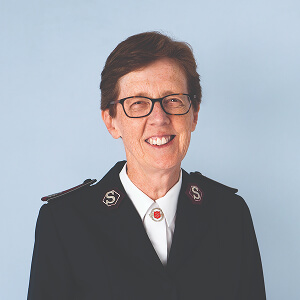 |
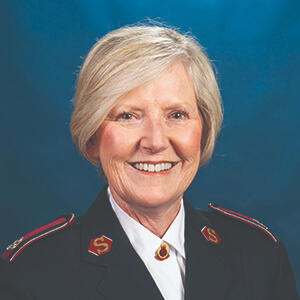 |
|
Commissioner Miriam Gluyas |
Colonel Winsome Merrett Chief Secretary Australia Territory |
What is the Stretch Reconciliation Action Plan?
A Reconciliation Action Plan (RAP) is an organisation’s structured approach to advancing reconciliation. The Salvation Army RAP represents our deep commitment to meaningful engagement with Aboriginal and Torres Strait Islander peoples and driving long-term reconciliation initiatives.
There are four different types of RAPs that an organisation can develop:
- Reflect
- Innovate
- Stretch
- Elevate
The Salvation Army has chosen to implement a Stretch RAP. According to Reconciliation Australia, a Stretch RAP is for organisations that are ready to embed reconciliation initiatives into their core business strategies. It builds on existing commitments, strengthens relationships and integrates reconciliation actions across all levels of the organisation.
Our Stretch RAP was developed through engagement with more than 1000 Salvation Army personnel and community members, including around 100 yarning circles that identified key priorities for reconciliation. These insights shaped the commitments outlined in our RAP, ensuring they are meaningful, actionable and measurable.
The RAP includes clear targets, timelines and accountability measures to ensure The Salvation Army stays focused on achieving sustainable and lasting change.
To further support this work, we have developed the Walk Alongside Church Toolkit, a resource designed to help our corps (churches) implement the reconciliation actions outlined in the RAP.
Artwork depicts our journey of reconciliation and calls for healing
Art is an important form of storytelling for Aboriginal and Torres Strait Islander peoples. In recognition of this, a piece of artwork was designed to represent The Salvation Army’s journey of reconciliation. Titled ‘Our Journey. Our Business. Our Guuyungs (camps/circles)’, the artwork engages our past, our present and our vision for the future.
A series of yarning circles held with Salvation Army staff and volunteers identified important themes and messages for reconciliation which were to be expressed in the artwork. Under the leadership of Lucy Davis, this significant piece of art for the Stretch RAP was brought to life by Salvation Army artists Sue Hodges, Glenn Westwood and James Algeo in the spirit of collaboration and reconciliation.
Reconciliation Action Plans
In addition to our current Stretch RAP (2025–2028), The Salvation Army previously launched four Reconciliation Action Plans in various states and territories.
- 2020-2022 Innovate Reconciliation Action Plan - Australia Territory | featuring the artwork "Our Strength, Our Truth, Our Journey" by Sue Hodges, Tanita Paige, Emma Park, Terrence Whyte
- 2020–2021 Reflect Reconciliation Action Plan - Tasmania Division | featuring the artwork “Unfinished Business” by Allan Mansell
- 2017–2018 Reflect Reconciliation Action Plan - Victoria Division | featuring the artwork “Gum Leaves” by Ngarra Katye Murray
- 2015–2017 Innovate Reconciliation Action Plan - (former) Australia Eastern Territory, comprising NSW, Queensland, ACT | featuring the artwork “Reconciliation” by Cindy Alsop