

Insurance
To insure or not to insure?
You can choose to either protect yourself from the big cost of a negative event by taking out insurance, or risk it that something will never go wrong– a big RISK to consider.
Everyone has important things in life they want to protect, such as health, home, car and even that major trip.
Insurance exists as a safety net when something happens unexpectedly. It won’t stop things from going wrong, but it will soften the blow by reducing your full loss.
Remember: Insuring your most important assets is also important.
Two main types of insurance are: Motor vehicle and home & contents.
Motor vehicle insurance
If you drive a car, motorbike or scooter, there are three main products:
- Compulsory Third Party (CTP): covers and protects any person you might injure when driving. It’s legally required when driving.
- Comprehensive Insurance: covers damage to your own vehicle and other people’s property, as well as theft and some other risks, plus legal costs.
- Third Party Property: covers damage to other people’s property and legal costs, but not damage to your own vehicle (if your vehicle is not worth very much then this might be a good option). You can also get add-on features like theft.
For more details, see Insurance Council of Australia's "Insurance Explained".
Home and contents insurance
Home building insurance
If you own your own home, then it’s a good idea to have insurance cover for an event that ends up causing total or partial damage to your property (e.g. fire or storm). Take time to check what a policy does and doesn’t cover - for example, the costs of rebuilding your house. An online calculator can help you work out how much home insurance you need.
Contents insurance
Contents insurance can be useful for homeowners and renters. It covers the cost of replacing or repairing household items such as: furniture, clothes, appliances and jewellery
Things to check here are:
- What’s covered?
- What’s the value of furniture, appliances, etc.?
- Will contents be covered on a “replacement” or “new for old” valuation basis?
An asset register helps make life easier
Keep a listing, sometimes called an “asset register”, of your contents and building add-ons and update it every 12 months or when your policy needs renewing. This will make life easier if something goes wrong and you have to make a claim on your policy.
Use a spreadsheet, workbook or an online app to help you calculate the value of your contents. Taking pictures of your contents will help too.
Activity:
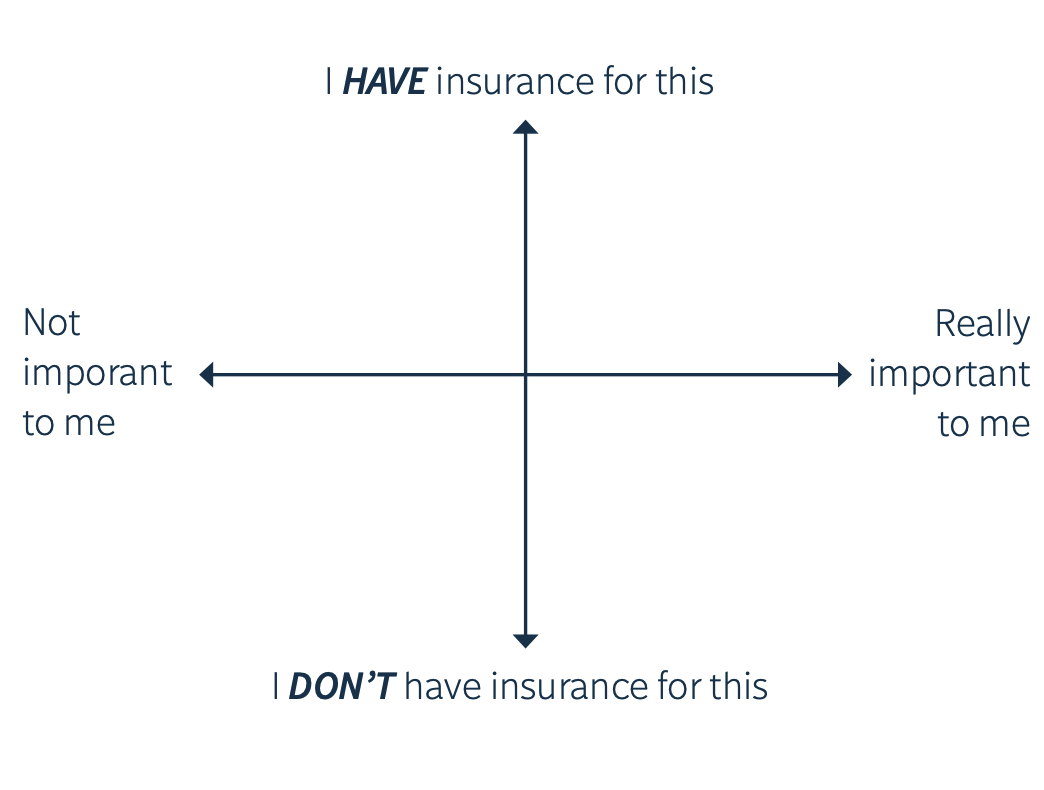
Write or draw all the different things you can insure on this picture. What did you notice?
So you've decided to get insurance...
Ask these questions before you sign on the line:
Do I understand what I’m signing? An Insurance Contract is a legally binding document with rights and obligations you need to be aware of. Understanding your policy means understanding your risk, and means you’ll have no nasty surprises if something goes wrong. Ask your insurer, or seek support from a trusted, independent friend or resource.
Is it covering the risk I want covered? Types of risk covered - e.g. Flood, fire, illness, injury etc.
How much will the payout be? For example, is my house insured for enough to rebuild? Is my car insured for enough to replace it? Does my policy provide “new for old” or is it an “agreed value” cover?
How much excess will I need to pay? This is the amount needed if you have to make a claim on your policy. A higher excess may reduce the amount you pay upfront (the premium), but make sure you can afford to pay the higher excess if you have to.
How do I make sure I stay covered? Most insurance lasts for 12 months so make a note of when your policy is ending. You may be able to pay your premiums halfyearly or even monthly. This is a good time to review and value your assets being insured to ensure the correct level of cover.
Have I got the best price? Shop around for the best deal. Remember that not all insurance companies will be included on a ‘comparison’ website and it may be difficult to compare exactly as companies can include different areas of coverage.
Can I change my mind after signing up for insurance? Typically, there is a 14-day “cooling off” period on policies that allows you time to change your mind. Check with your insurer.
Activity
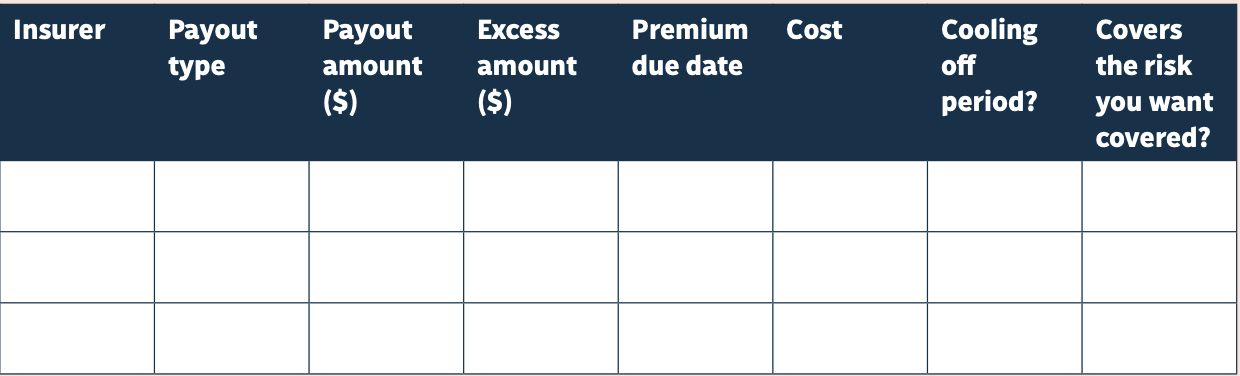
Insurance inspecting
Use this table to help you compare different options for the risk you want to cover.
Other insurance
Funeral insurance
Can be expensive and may not be the best option, so ask lots of questions before signing up. There are other ways of covering funeral expenses that can still bring peace of mind, like a prepaid funeral or funeral bond. See the Government’s Moneysmart website for more useful info.
Junk insurance
Often “add-on” products that we buy on impulse when purchasing another product. Avoid them if you can.
Examples of these so-called ‘junk insurance’ products include:
- Credit card insurance (payout rate of only 23%)
- Used car extended warranty (payout rate less than 7%)
Demand a refund! If you, like many other people, are paying for junk insurance, you may be able to get a refund! Find Demand A Refund online.
Activity:
Take the M.I.C. (My Insurance Checker)
Which of these apply to you?
❒ I know the name of the company my house / car is insured with and can find the policy
❒ I know the excess on my house/contents insurance and/or my motor vehicle
❒ I know if I am covered for TPP or Comprehensive on my car
❒ I always buy travel insurance when travelling overseas
❒ I get three quotes when I renew my insurance
❒ I have an asset register with a list of items in my house in event of fire, etc.
❒ I have insurance cover for the things that are most important to me
What surprised you?
What gaps for action are there?
How will you get there?