

Decision making
Choosing like a champion
We make financial decisions every day and with each decision comes a range of options. This can be exhausting and lead to a failure to choose the best option, or failing to make any choice.
Indecision becomes a decision to do nothing - this can sometimes be the worst decision of all.
The right tool for the job
There are systems to make decision making easier. For example, a shopping list is
an effective tool to use when buying your groceries. For big purchases, like a new phone plan, we’ve included simple tools in our Shopping Smart section.
Making great decisions under pressure
Making big financial decisions can be tough, especially if you’re under time pressure and feeling rushed. It won’t surprise you to learn that over one in
three Australians find dealing with money ‘stressful and overwhelming’ (ASIC, 2018).
The power of presence
One of the best things you can do is slow down and step into the
present moment. This helps you take note of what you’re feeling so you can:
- Step back: Why are you making this decision and what are you basing it on?
Is it made out of fear or uncertainty? It is in line with the person you want to be? - Step outside: How would you advise someone else in this situation? Imagine you were making the decision for a family member or a trusted friend - what would you do?
- Step away: Is now the best time to make this decision? Could you return to it in two minutes, two hours or two days time?
- Step forward: Look to the future. We choose immediate rewards because they make us feel good in the moment. What other rewards could come if you delay this decision?
Release regret (and learn for later)
We encourage you to accept the choices that you do make. If you are disappointed with the decision you make, acknowledge your feelings of disappointment but try not to dwell on it. Remember, there will always be another decision that needs to be made. Is there something you've learnt that you would do differently?
Decision-making tip: Mindfulness (or pausing on the platform)
Marketers and salespeople make their money by getting us to spend ours, hoping to sweep us into ‘boarding the train’ with fast thoughts and fast decisions.
A helpful analogy is that we can’t control which trains (or thoughts) pull in at the station, but we can choose whether to board the train. Mindfulness practices help us pause on the platform and view the thoughts objectively, rather than get swept up in their momentum.
Step-by-step guide for your next ‘big’ spend
You have options
Do you need money urgently because the fridge has broken down? It’s really important to avoid rushing into an expensive mistake!
Assess your options to avoid rushing into a decision you’ll regret later.
Product options
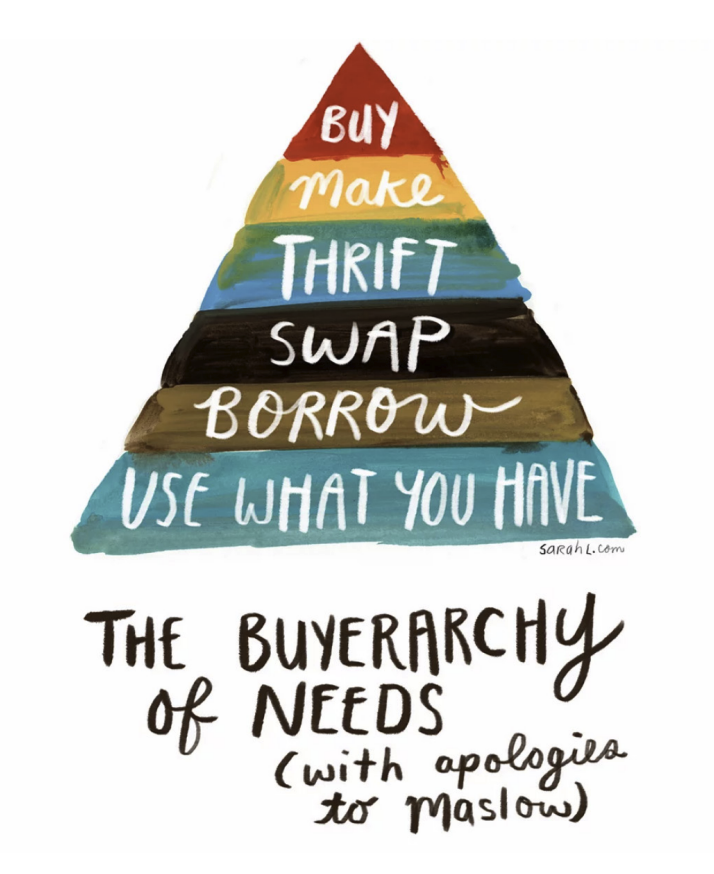
What no-cost or low-cost alternatives are there that could get you through in the short term while you save up?
Could you BORROW or SWITCH, for example:
- Borrow a friend's spare bar fridge for a few weeks
- Wash your clothes at your neighbour's
- Buy second-hand
Payment options
There are many options out there, but some should be avoided because they are high cost and will leave you worse off in the long run.
Little or no interest and fees
| Option | Details |
| Cash | You may be able to negotiate for a discount |
| Save | See our savings section for our tips and tricks |
| Family and friends | Make sure you're both clear on what's being agreed upon |
| Store lay-buy or pay-by-instalments | Check for any fees, charges |
| Centrelink advances | Interest-free prepayment of Centrelink benefits |
| No Interest Loans (NILS) | For household goods and health or education up to $1,500 repaid in 12-18 months |
High interest and fees
We cover these last resort options in more detail in other parts of this book. Before you agree, ask how much you will pay in interest and fees over the life of the loan.
| Option | Details | Dangers |
| Buy now pay later | Pay for a product after purchase in instalments | Can be late fees/ monthly account fees/ payment processing fees/ often no credit or affordability check |
| Credit cards | Make purchases and pay for them later | High interest if not repaid in full each month/ fees |
| Interest free, in store deals | In store promotional deals that encourage you to pay later | Check for annual charges or account keeping fees, high interest after interest-free period expires |
| Store cards | Similar to credit cards but issued through retail stores | High interest if not repaid in full each month/ fees |
| Payday or small loan | Repay loans of up to $2,000 in 16 days to 1 year | High fees, interest and charges |
| Rent-to-buy | Paying weekly amounts | Fees – account keeping, missed payments, break the lease or repay early |