
Latest news
Things you may not know about The Salvation Army Australia
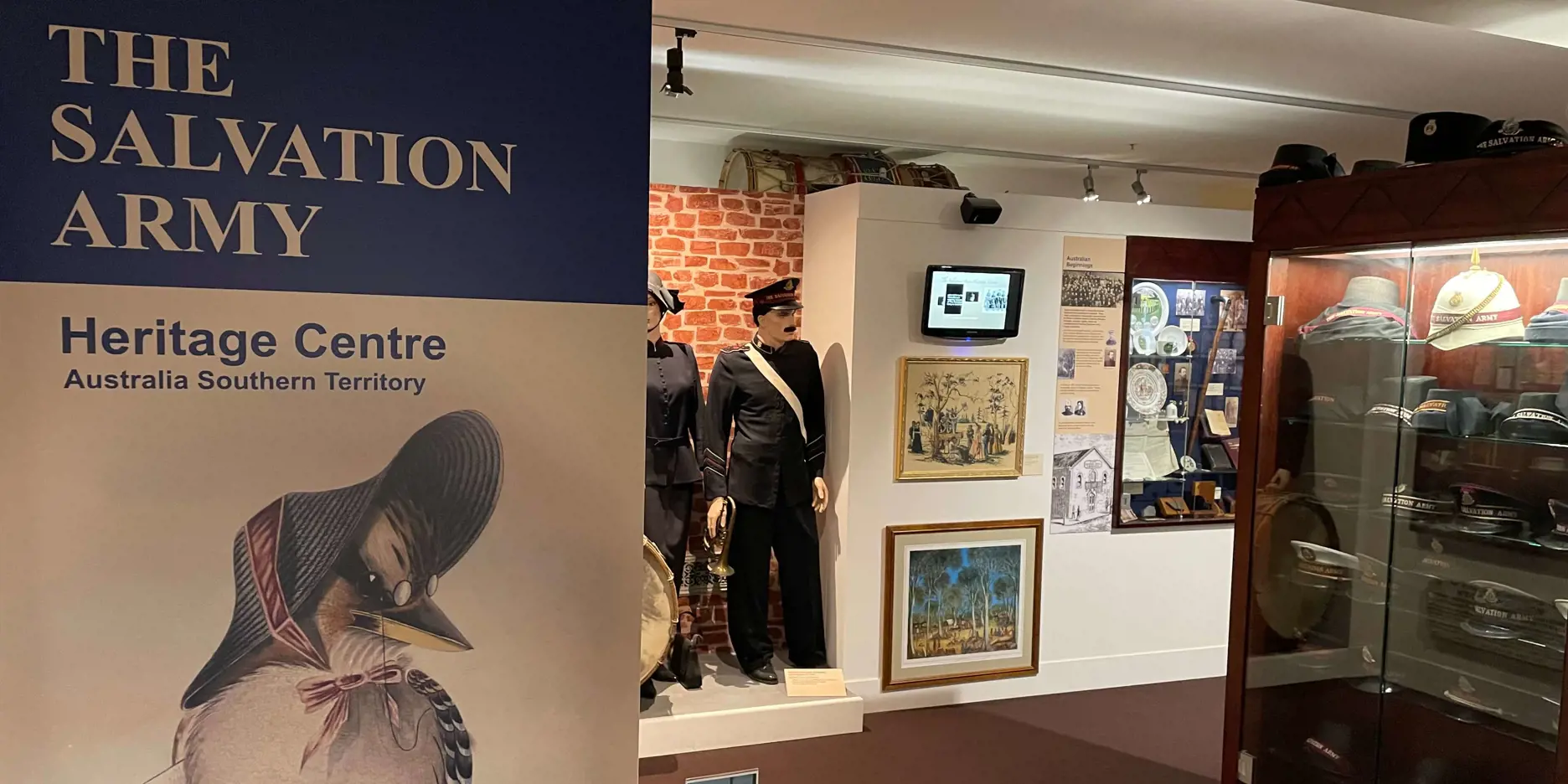
The Salvation Army's history in Australia is rich and varied, with many fascinating stories yet to be widely shared — until now! Brand writer Markos Hasiotis went on a special research mission to The Salvation Army Heritage Centre in Melbourne and assembled some interesting facts on the Salvos’ history and work in this country.
A big thanks to Barry Gittins, Museum Specialist, whose insights and knowledge were truly invaluable in this process.
The Salvation Army advocated for Australia’s Federation... and filmed it
The Salvos have been around since Australia was formed as a nation, and even played a small part in its formation. The Salvation Army actively promoted the federation of Australia ‘in a desire to remove those boundaries which separate peoples and nations’.
When the nation of Australia was officially inaugurated on 1 January 1901, the Salvos were there to film it. The New South Wales (NSW) Government had commissioned the organisation’s Limelight Department to document the occasion, in what is said to be the first moving footage of a nation being created.
Australians are the only ones who call The Salvation Army ‘the Salvos’
In true Australian style, we came up with a short and catchy nickname that managed to stick in the vernacular for many years. The earliest use of the term ‘Salvos’ can be found in 1900, in the organisation's official news publication War Cry (now known as Salvos Magazine). While other countries have their own nicknames for The Salvation Army, such as ‘Sally Ann’ (Canada) and the ‘Sallies’ (New Zealand), ‘Salvos’ is all ours.
The Salvos have dabbled in tea and coffee
The Hamodava Tea Company was started in Australia by none other than Herbert Booth, the third son of Salvation Army founders William and Catherine Booth. The company sold tea, coffee and cocoa, with the profits helping to fund the operations of The Salvation Army. In addition, the farmers who harvested Hamodava tea were given good terms and even the chance to buy the land they worked on. This generous approach reflected fair trade principles decades before the concept of fair trade was established. In recent years, the Hamodava brand has been revived by The Salvation Army in New Zealand, to continue brewing good change.
Fertile history in suburbs of Melbourne
It turns out The Salvation Army has a meaningful connection with the Victorian suburb of Pakenham. It was the site of a farm colony that provided accommodation and work to unemployed men in the 1890s — addressing the economic and social hardship of the 1890s Depression in pragmatic Salvos style. The workers on the colony picked produce and cut firewood, and even built a tramline from the farm to the Pakenham Railway Station to get the products to market. In subsequent years, the land in Pakenham also housed Salvation Army-run reformatories for young people and a retreat for older men.
The work of Major Mary Anderson
A truly inspiring, lesser-known chapter in the organisation's history is the contribution that Major Mary Anderson made towards the welfare of women and girls. Born in New Zealand, Mary was in her 20s when she became a Salvation Army officer. During her decades of service, she worked in the Melbourne Police Court, assisting women and girls in distress, and helping ensure they received care and rehabilitation rather than prison time. Through Mary’s work, many of the women and girls experiencing troubles were able to make a fresh start in life.
In addition to her work with the police, Mary also served as matron of Salvation Army women’s shelters. In a fitting tribute to her efforts, Mary was among a selected few to receive the Order of the Founder — the highest honour in The Salvation Army.
One of Australia’s first employment centres
Did you know — the roots of the Salvos’ employment service provider, Employment Plus, extend back over 100 years. The Salvation Army established a free labour bureau in Melbourne amidst the tough economic conditions of the 1890s. The bureau aimed to not only find work for unemployed people, but also relieve distress through the provision of meals, supplies, and other forms of practical support. From the free labour bureau of the 1890s to Employment Plus today, The Salvation Army remains committed to meeting people at their point of need, and helping them build a better future through meaningful employment.
Opening the gates of opportunity after prison
Providing support and housing to people after their release from prison was one of the first social services delivered by the Salvos in Australia — it was even recognised in the writings of William Booth himself. The program, known as the Prison Gate Brigade, aimed to help people start a new life after leaving prison. It proved successful too, with many uplifting transformation stories. The service helped many people find stable employment, secure accommodation and reconnect with their communities after release. One example was M.J. , a new arrival in Australia who struggled with alcohol dependency and found himself incarcerated. After his release, he sought support from the Prison Gate Brigade and turned his life around, even securing a respectable job at a bank. The legacy of this prison work has continued, helping inspire a new program launched in 2023 that offers similar support to people re-entering the community after incarceration.
The Salvos faced opposition in the early days
The early days of The Salvation Army in Australia were far from smooth sailing. For their street music, Salvos received fines and public disapproval, particularly among more conservative religious people who didn’t believe faith should be expressed in the exuberant ways The Salvation Army demonstrated. The Salvos were also targeted by a troublemaking group known as The Skeleton Army, who would disrupt Salvation Army services and even throw things at them. However, with time, many of the negative responses subsided as the positive impact of The Salvation Army in the community grew.
These stories may be lesser known, but they highlight a defining feature of The Salvation Army in Australia — supporting people and strengthening communities in the face of hardship and crisis. More than 140 years later, that mission continues, and everyone is welcome to be part of it.
To learn more about The Salvation Army Heritage Centre and arrange a visit, please visit The Salvation Army Australia Museum Facebook page or call (03) 9653 3270.