Latest news
From grief to a global movement: International Overdose Awareness Day
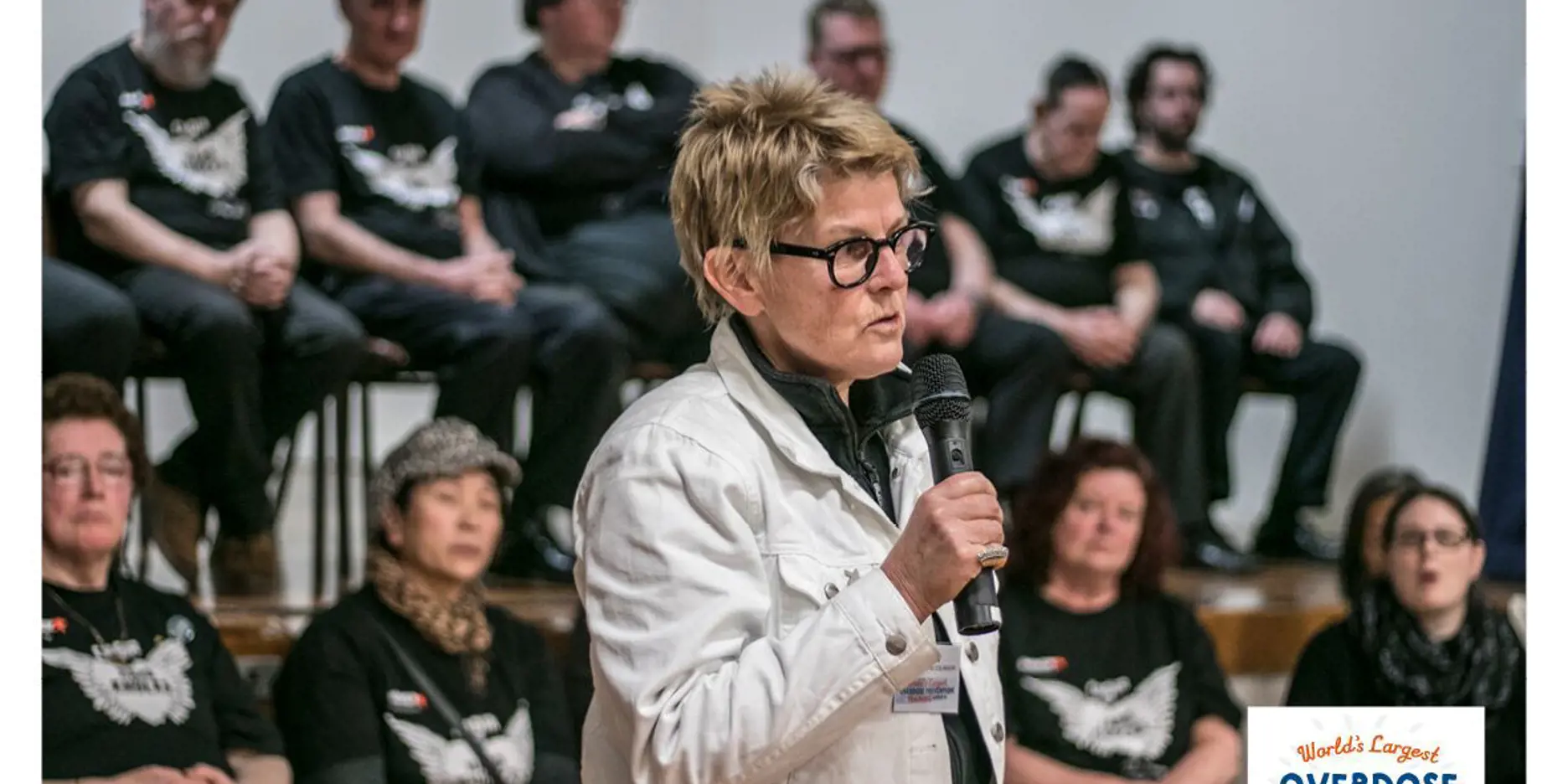
25 years ago, Salvos worker Sally J. Finn (Finn) had a simple but powerful idea — create a day when people could mourn loved ones lost to overdose without shame.
Today, International Overdose Awareness Day — observed annually on 31 August and run by the Penington Institute — is marked in communities around the world.
But for its founder, the day has always been about people.
"At its heart, Overdose Awareness Day is a day that commemorates the death of a loved one," says Finn, who is now a Needle Syring Program worker for The Salvation Army in St Kilda, Melbourne.
Her determination to establish the day was born from decades spent walking alongside people whose grief was made heavier by stigma. As a young social worker in rural Victoria during the early 1980s, Finn met a mother whose son, Nick, had died from an overdose. Rather than finding comfort in her community, the woman was shunned and blamed. Even members of her own family struggled to show compassion.
The experience left a lasting impression on Finn.
"I never forgot the effect that the stigma of losing Nick had on his mother," she recalls. "In a time of great and complex pain, she felt a type of disgrace that made grieving profoundly difficult.
Her pain was exacerbated by people seeing Nick, not by what he was, but by what he had done.”
Years later, while working in children's mental health and then managing The Salvation Army St Kilda Needle and Syringe Program, she met countless families carrying similar stories.
Overdose snapshot 2024
- Drug-induced deaths reached the highest level on record in 2024 (2596 deaths)
- In 2024, all drug-induced deaths accounted for 76,887 years of potential life lost — the equivalent of 31 years per person
- In 2024, the number of drug-induced deaths was just under twice the number of road traffic deaths (1307) — the largest on record excess of drug-induced deaths compared to road traffic accidents in 2024
- For all drug-induced deaths, the most common drugs involved were opioids (1083), stimulants (843), and benzodiazepines (696)
- The Penington Institute 2026 Snapshot shows that Australia is losing seven people a day to overdose
Time to mourn
What struck Finn most was not only the devastating loss, but the isolation that followed.
"There was a need to set aside one day in the calendar to acknowledge that loss," she says. "To give people a chance to mourn without shame."
In 2001, that vision became reality.
With just $750 from a local community grant, Finn and colleagues bought silver ribbons and pins and launched the first Overdose Day in Melbourne in 2001. More than 6000 ribbons were handed out. 25 years later, the movement spans dozens of countries across the world.
Despite its growth, Finn says the purpose has never changed.
For her, International Overdose Awareness Day is an act of remembrance, and a call to action.
“The main focus of this day is the families and friends left behind,” she says. “It’s important that they have a day where they can mourn their loss and, even more so, take pride in the person they have lost.
“It’s also around building awareness, acknowledging people living with injuries from non-fatal overdose, and challenging the stigma that continues to surround drug use and addiction.”
Most importantly, Finn hopes the day reminds people that every life has value and every person deserves dignity, care, and the chance to be remembered.
For the families, friends and communities who gather each 31 August, that message remains as important today as it was when one social worker decided that no one should have to grieve alone.
For more information about the Salvos alcohol and other drug (AOD) support and rehab services, visit our Alcohol and other drug services page.
If your life, or that of someone you know is in danger, please call 000
Lifeline: 13 11 14
National Alcohol and Other Drug hotline: 1800 250 015
This article has been adapted from a piece featured on Salvos Magazine.
Related news