The impact of housing stress on individuals and families
Unaffordable housing is a growing cause of homelessness
Australia is experiencing a housing crisis, putting more people at risk of housing insecurity and homelessness. Contributing factors include rising rents, higher mortgage repayments, a shortage of affordable housing, and limited access to social housing.
The fact is that housing affordability is an increasingly common contributor to homelessness in Australia. According to the Australian Institute of Health and Welfare (AIHW), 36% of Specialist Homelessness Services (SHS) clients in 2024–25 reported housing affordability stress as a reason for seeking assistance, up from 23% in 2014–15.
What is driving the Australian housing and rental crisis?
A lower-income household is considered to be in housing stress when it spends more than 30% of its gross income on housing costs — a situation that is common for many Australians.
The rising cost of living means more people are being stretched to the limit, struggling to cover rent or mortgage payments along with essential bills like electricity.
In addition, there are fewer properties available to rent as the population has grown. This is partly due to the return of international students and other migrants following the COVID-19 pandemic, increasing the demand for rental housing.
Demand for affordable housing has not been met by new supply due to higher interest rates, rising construction costs, as well as constraints in labour and the supply chain.
When there are fewer properties available to rent or buy, prices are driven higher, which continues to place stress on people’s ever-tightening budgets. This leads to a housing crisis.
How the housing crisis is affecting people in Australia:
- During May-June 2026, 26% of Australians were personally concerned about being homeless or losing their home within the next 12 months, with 10 per cent very concerned
Source: The Salvation Army Internal Research, June 2026 - Latest data suggests that 22% of households renting privately are below the poverty line and, of these, 36% are lacking two or more essential items
Source: Material Deprivation in Australia: The Essentials of Life, the Australian Council of Social Service (ACOSS) and the University of New South Wales (UNSW) 2024 - In April 2026, over half (56%) of Australians said they will struggle to pay at least one bill in the next three months — this includes rent and mortgage
Source: AustraliaNOW report, May 2026 - Research in 2026 suggests 0.5% of rental listings were affordable for a person earning a full-time minimum wage
Source: Anglicare Australia’s 2026 Rental Affordability Snapshot
Housing stress and The Salvation Army
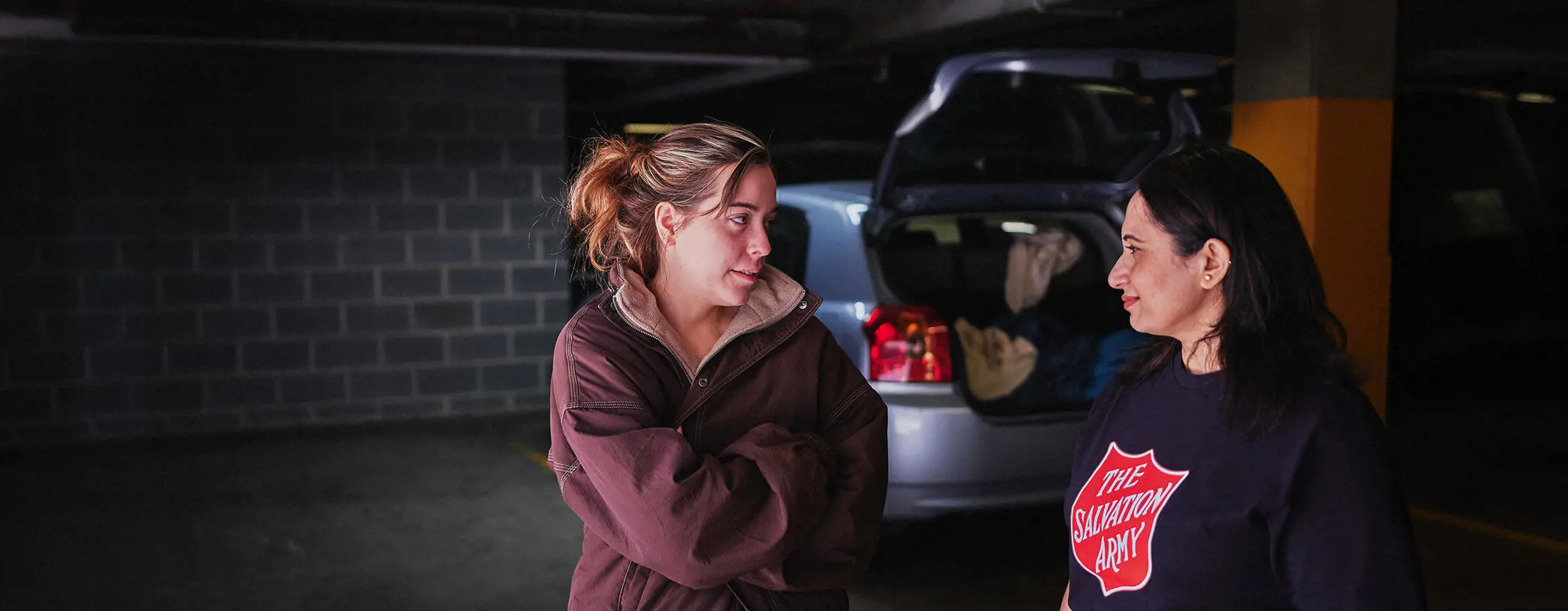
The Salvation Army sees firsthand the impact of housing stress on individuals and families through our Emergency Relief centres. We support people experiencing or at risk of homelessness, as well as those going through financial hardship or facing a family crisis. Our services provide compassion, a listening ear, and practical support to help people move forward.
In May 2026, The Salvation Army's Centre for Mission Impact team released findings from a study among people who sought assistance from a Salvation Army Emergency Relief centre in the past 12 months to understand their situations.
It showed after covering housing costs, households were left with $280 per week, equating to less than $40 per day.
43%
76%
38%
48%
Source: Russell, C., & Verrelli, S. (2026). The Red Shield Report 2026: Falling short. The Salvation Army Australia.
Hope for Australians in need
Thankfully, when people reach out for support early, The Salvation Army can often help. We do this in a variety of ways, including assisting with living costs, supporting debt reduction and repayment plans, advocating for tenants, and helping people find more affordable housing.
As of 30 June 2025, Salvation Army Housing (SAH) managed nearly 2000 properties throughout Australia, providing long-term, transitional, and crisis housing to almost 3000 people.