
Stories
Building resilience with 'The Barefoot Investor'
Financial disasters don’t discriminate. Whether it’s a natural disaster, national economic crisis, sudden job loss, change to family circumstances or a global pandemic – financial hardship can affect anyone.
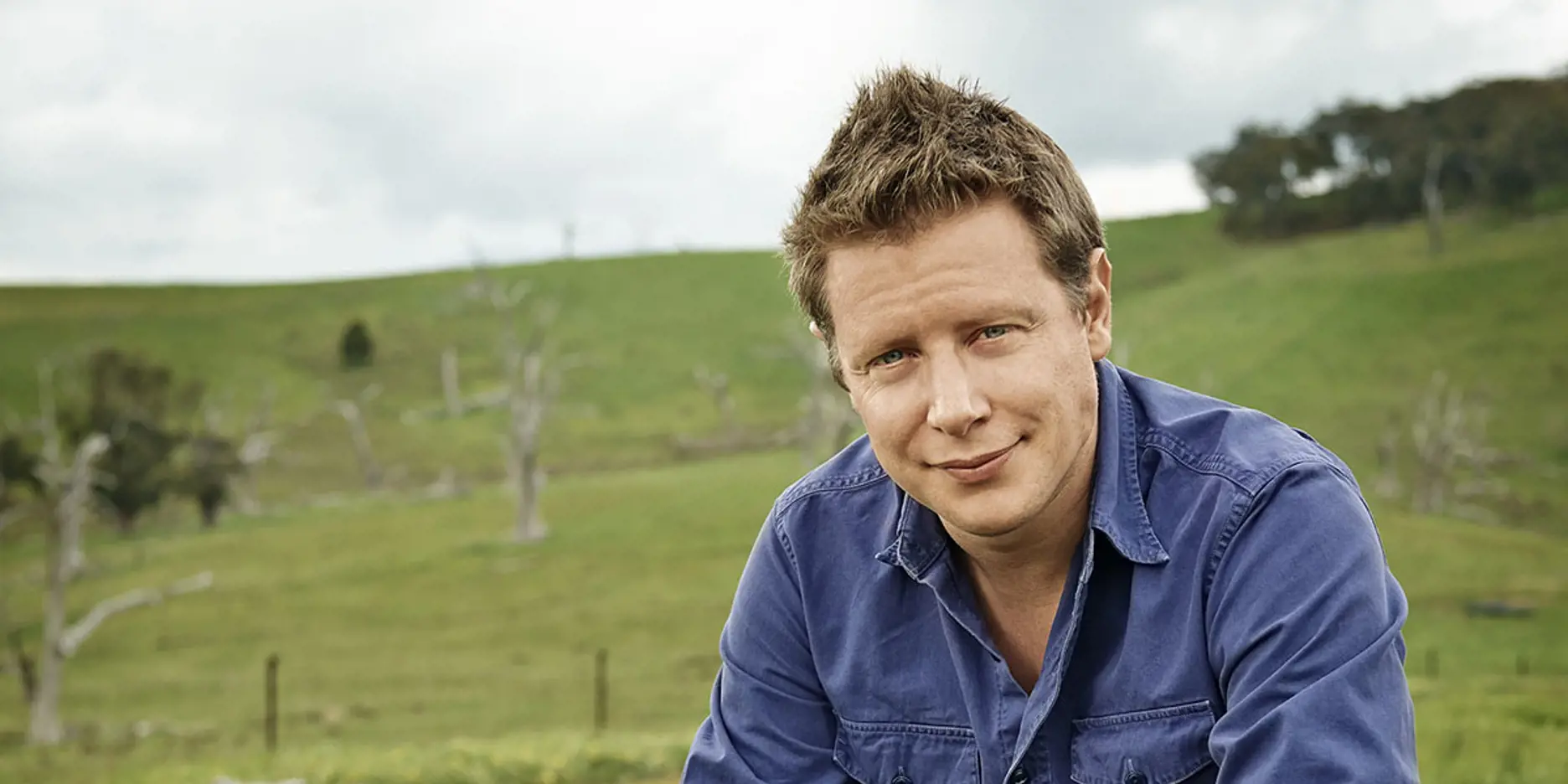
Bestselling author Scott Pape knows the reality of this all too well.
Since first writing The Barefoot Investor in 2004, Scott Pape has become a household name in Australia. The Barefoot Investor and Scott’s second book, The Barefoot Investor Families, take pride of place on many thousands of Australian bookshelves.
In this audio interview, Salvation Army Moneycare financial counsellor Kristen Hartnett speaks to Scott about resilience and his journey as a financial advisor, financial counsellor and bestselling author.
Scott shares his no-nonsense approach to financial freedom, looking at building financial resilience, as well as exploring the benefits of financial counselling.
Listen to the interview
Full transcript
Kristen: Since first writing the bestseller, The Barefoot Investor, in 2004, Scott Pape has become a household name in Australia. The Barefoot Investor and Scott's second book, The Barefoot Investor Families, take pride of place on many thousands of bookshelves. And it's his no-nonsense approach that we all like and resonate with, a no-nonsense approach to financial freedom. Scott's helped lift financial burdens for many people and take control of their financial future.
So needless to say, I am very excited that Scott is actually joining with us today as we explore the journey that he's been on, a journey from a financial advisor and best-selling author to becoming a financial counsellor. And together, we're going to peel away the perceptions and shed some light on the real purpose and the real power of financial counselling, the power of reaching out, the power of sharing your story. And we're going to actually look at it through the lens of overcoming disaster and financial resilience. So welcome, Scott. Great to chat to you today.
Scott: Thanks very much. I really appreciate you having me on.
Kristen: So what has your last week looked like?
Scott: My last week, I have actually been, I'm in lockdown, so I'm in Victoria. So I'm in regional Victoria on my farm at the moment. But one of the really interesting things we've been doing in the last few days is planting more trees. And what I was saying to my kids as we were planting these trees is there's lots of dead trees around, and that was from the fire that took our home in 2014.
So it's just that thing that even sort of six years on, I'm still surrounded by that one moment that really changed the course of my life. And that idea that you're reminded of it when you look out onto things is something that, yeah, I don't think will ever leave me. But the other thing is the ability to start again and to rebuild and to plant again, which I think has been really good.
The ability to start again...
Kristen: I think your tree and replanting is quite symbolic, isn't it? It's, we see the crumble of things happening, unplanned events, things that we couldn't plan for, and especially in 2020, we know that very true, but then we also see the resilience and the hope. And we'll talk a little bit more about your story later on.
The thing that I really want to know from you and straight up is about what, you know, motivated you to become a financial counsellor. You've been very successful in, you know, in the other realms of the finance industry. And so why choose to become a financial counsellor and add this set of skills into your sort of career? And why now?
Scott: That is a really interesting question. So there's a couple of answers to that.
The first one really harks back to my dad. I was the sort of, you know, a few years ago, I was doing very well, I was getting a name for myself, I was earning good money. And in the back of my head was something my dad said to me many, many years ago, which was basically just make sure you don't be a wanker, right? Just look after the battlers. And that was always in the back of my head.
I am a country kid, you know, I'm not somebody, even though I've worked at the stock exchange and done lots of things. At the heart of it, I'm still a country kid. I live on a farm and I live in a small community. And community is very important to me. And helping people within the community is really important. So that's kind of the ethos as to what I'm really interested in.
But the other one was, so I sat down with my wife and I just saw, I think we just cracked through a million copies of The Barefoot Investor. And she said, we're out on a date night. And she said, you know, "what's next? What are you going to do?" And I said to her, "look, I'm thinking about going to TAFE to study financial counselling".
And she was a little shocked when I told her that because I have a business and employees and, you know, young family and stuff. And I decided that I actually go to TAFE and study financial counselling. But it was it's something that I've thoroughly enjoyed. And I guess the thinking for me was that I'd built a platform where I had a lot of people who follow me and being able to use that platform to broaden the awareness of what many people call the world's best kept secret.
Kristen: Now, thanks for that. So I want to follow with a couple of questions. So Dad was a big influence, wasn't he? Dad had a voice and a statement that stayed in your head and carried through. What advice would you give your kids?
Scott: Well, I mean, this is the really lovely thing about living on a farm with my kids now. I've got to admit, you know, lockdown for a lot of months. I'm lucky that we've got this big farm because I think about other mates of mine who are in apartments and stuff with their kids. I have three children and a pregnant wife. So we're going to have a fourth by the end of the year. You know, we've got a lot of land to be running around in, which has been good.
But the thing that I have done with I've done with my kids is we do a little jam jars. So they've got plenty of jobs to do. And one of those jam jars is giving. And so it is that idea of explaining to them that not everyone is as lucky as they are and that we have money, that you earn money, you give and you support people within your community and things you care about.
And part of, I guess, 2014, the fires came through, we lost everything. Part of our rebuilding and our refocusing on things is to explain what happened to the kids. And we get to put our narrative on that event. And the meaning that we have chosen to focus on as a family is that people are good. There are people in our community who really care about us.
There are people like financial counsellors and other services that stepped up and really helped us in our time of need. And that is the meaning that we take out of that as a family. So we've had a lot of great things happen to us. And it's now our job now that we're back on our feet to help other people within our community.
Kristen: Scott, you know, I know that you actually do financial counselling on a voluntary basis. You don't even receive a pay. Can you, for this service, can you tell me a little bit about why, why do it for nothing? Why actually go out and become a financial counsellor and not receive any pay for it?
Scott: I have done, you know, I've done a lot in my career and I've sold millions of copies of books and I've helped a lot of people. But when you go in and sit down with someone as a financial counsellor and they are really, in some cases, really at rock bottom and you can be there to walk beside them, to show them their options, to broaden their horizon, help them get back on their feet.
That for me, and I don't get paid to be a financial counsellor. I do it, I'm a volunteer and a proud volunteer. That for me, I get so much out of financial counselling that I wouldn't get from writing books or from, you know, even being, you know, in my in my old job, but, you know, with investments and financial planning, you know, it is an amazing feeling to be able to help people within the community get back on their feet and really see the difference that it makes to them and to their family. So, yeah, that for me, financial counselling is an amazing thing that a skill that I've learnt.
And my only wish is that more people would come and get the service because I think there's a bit of a bit of a misunderstanding because it's free. People say, well, what's the catch? And the answer is, is that there is no catch, you know, and I think that may stop some people from utilising these services. But, you know, the financial counsellors that I have worked with are some of the most intelligent, experienced, empathetic people, you know, that I've come across in a couple of decades of working in the finance industry.
People just don't, it seems too good to be true. It's like, well, hang on, why are these, you know, why are these people doing it for free? And if they're doing it for free, they must not be any good. And it's like, well, no, I'm doing it because I have a purpose, because I feel like I can, when I get up in the morning and I help people, I feel really good about it.
And I'm very good at what I do. That sounds really arrogant, but it's true. And the people that I work with are amazing. You know, the reason is, is that they're not salespeople. They're not there to earn money for themselves. They're there to make a difference in their community.
And I think that is the difference. We are very good at advocating for our clients and standing up to the banks and getting good outcomes for our clients. We do that every single day. And there are a lot of financial counsellors that are much better at it than me. I'm still learning, but it really is an amazing sector and an amazing service.
We are very good at advocating for our clients...
Kristen: Sure. And I think it just shares with all of us that we've all got the capacity to give. Whilst you're doing it with the jam jars with the kids and doing money, what I'm hearing from you is that you're giving of your time and your expertise. And sometimes we know that sometimes just the smile that we give is the life-saving thing. They're just sitting down with someone listening to their story is giving. And it's that giving that actually is life-saving.
So it's really interesting to hear your journey. Scott, from the outside, we would have thought the bushfire went through, you would have been insured, you would have been okay. Is that the story or not?
Scott: Um, it partially is. So for those of you who don't know, so 2014, February 11th, 2014 were said to be the worst condition since Black Saturday. So we had, it was code red. So my wife and we had one son at the time were in the city. I came back here to the farm where I'm recording from now. With the wonders of Zoom. And I'm in the country fire authority. So I'm in the CFA.
So I was at the house here at the farm. And what I didn't realise was I was sort of lulled into it because I had a pager. The pager to my CFA fire alarm didn't go off. So I was thinking, well, you know, there's a little bit of smoke, it'll be fine. What I didn't realise was that all the farms around me had been evacuated and there was a fire around us. So I got out okay. It was when I jumped into the car, the ABC radio said, it's too late to leave. You've got to take shelter. And that was a really stressful period, obviously.
And then the next day I came back and we didn't get anything out. We lost everything. And our farm was declared a disaster zone. So we weren't allowed back in. In order to get back in, we had to go to a makeshift recovery centre.
And that was where I met a financial counsellor because I had to get a form signed off. And the really interesting thing is that even though I had been writing about financial counselling for, you know, at that time, a decade, and I knew everything about it, I sat in the line or stood in the line and I was really angry. I didn't want to talk to anyone. I just said, when I met her, I said, sign this form. I want to get back to my farm so then I can get through the barricades and I want to get back to normal.
And what she said to me is something that I'll never forget. She put her hand on my hand and said, "honey, you've lost everything. You've got a young wife and a little baby. You need to let somebody look after you or, you know, take care of you. I'm a financial counsellor. That's what I do". And I said, "great, sign the form. I'm out of here". And I, cause I was at the time, I was in shock. I was angry. Probably like a lot of people who are listening who have been through this. I just wanted to get back to normal.
And what was hard for me was that I was in the media. So I was on, I was doing the channel seven finance nationally every night. So I had choppers coming over my house. I had people ringing me to do interviews. I had people turning up to my house. It was completely overwhelming.
And yes, we were insured, but I couldn't really say this at the time, but I didn't have enough insurance for about 10 kilometres of fencing that all got lost. And so there were, I won't say there were financial pressures, but I wasn't covered as much as I should have been. Just on those small things, the house was definitely covered. But then there was the idea of, you know, we had livestock that were destroyed. It was just a chaotic time and completely overwhelming.
And, you know, when the recent fires came through, I understood the journey because for the first couple of weeks, it is overwhelming. The amount of support and everyone, people ring you that you haven't heard of for years, you know, and everyone wants to help. And people are trying to send you money and sending you junk, you know, that I just want to get rid of. And then what happens after a couple of weeks is that very quickly, everybody moves on. And a lot of people forget because for them, they've moved on. Why haven't you? And, you know, you're still staring out at blackened paddocks, you know, and everything around you is dead.
And to that point, you asked me what I did this week. You know, I've had the kids out, we've been planting trees, but there are still dead trees around, even though we bulldozed a lot of them up. There's still the reminder of what happened there. So it was a really stressful time.
And I also understand a couple of points. The first one is that disasters don't discriminate. You know, it happened to us. It happened to a number of families in our area.
Disasters don't discriminate.
But the second one is that everybody thinks that you'll put your hand up and say, I need financial counselling, you know, that day. Well, you know, it really, for me, it wasn't until about the three-month mark where I fell on a heap and I just got really depressed because I was just trying to get back to normal. And I realised that it was, I was just battling against it. I was battling council. I was battling the insurance company. I was battling everyone.
And that was when I put my hand up to get help. And I say that, that it was the best thing that I, that I, that I did. My wife told me I should. I took her advice and I did. But to that point that some people don't ask for help or don't feel like get to the point of where they need, think they understand they need help. It could be a couple of years down the track. You know, everyone's different. Everyone processes all this differently.
Kristen: And I think we, we started at the material loss, but what I'm hearing from you is very quickly, it was the emotional cost that became massive. And for you, the healing came, well, through a wife that said connect, you know, someone who knows you well, encouraging you to connect. And then you taking the steps to reach out for that help. Was that hard, Scott? With having a high profile to reach out for help for you?
Scott: Not as much as you would think. You know, I'm very blessed to have a wonderful wife. And she saw that I was really struggling and I was, I was getting really angry at silly things just because, and again, I want to say this again, because it, when I do financial counselling to bushfire survivors, the same thing, everyone's story is different, but the thing that comes back to me again and again is that we all just want to get back to normal. We want to get back to the time before the fires and that's what we want. We want to get back to where we were.
And the process of bushfire counselling that I went to was the understanding and the acceptance that you don't get back to normal. Things will never get back to normal. You find a new normal, but it's, but it's not the same. And that was a real realisation for me because I was really burning the midnight oil trying to get my family back to where we were. And it wasn't until we actually just embraced it and said, this is part of our story. And the meaning, again, that we took from it was there's some really great people that in this community that really stood up and helped us. And I think you have to get some meaning out of it or things do become really dark.
But was it hard for me to put my hand up and get help? No, because my wife and I have a very strong relationship and she said, you need to go and do this. But I also, you know, the really interesting thing about doing bushfire financial counselling is I was up in the Upper Murray, I was stationed there. We had a card table in the community hall and people came in and people that would never normally go and see a financial counsellor or access any services came through. And just feeling that, just seeing them have the weight lifted off them after they explained things to somebody who really understood what they were going through. You know, it really helped a lot of people.
Kristen: Yeah, no doubt. And that's, I think in this instance, you've drawn from your professional life, but also your personal experience, each valuable to bring sort of comfort, support to others. And we know that all financial counsellors have their own personal experiences as well. Their own stories that they can bring, you know, to that community member that reaches out to them.
I'm just sort of wondering, like, obviously the other disaster this year, well, if we call it a natural disaster with COVID, we've seen it sweep through the world, quite frankly. You know, just sort of wondering that, what would your sort of, what would you like to share with anyone whose circumstances have changed because of COVID? Or, actually, I'm going to widen that to anything, because of any reason, a relationship breakdown, the loss of health. What would you really like to share with them?
Scott: What I would say is seven words: you have more options than you think.
You have more options than you think.
That's the thing about financial counselling. For me as a financial counsellor, there are two things or three things that we can do.
The first one is we will hear your story, right? And often when you tell your story, that alone is part of the healing process, that you're telling your story. You know, "my partner has left me", "I've lost my job", "I'm ill", whatever it is, "I've been bushfire affected" - you tell your story.
The second thing is that what we are really, really good at is not only listening, but also understanding the options that you have. And as a finance professional, right? But when I went through the course of financial counselling, there were light bulbs going off for me that I didn't know about, with the options that you have if you're in hardship, you know, that I didn't know as a professional. You know, so it really is financial counsellors are wonderful at looking through the options, not telling you what to do, but to broaden in your perspective of what options you have.
And the third thing that financial counsellors do is they get you back in control. So often if you're sitting here and you're listening to it and you go to bed and you're playing at different scenarios, and generally they go to the worst scenarios, the later it gets, and you're just muddled and you just don't feel like you can get out.
The thing for me is going and sitting down with a financial counsellor who is an expert at listening, who is an expert at understanding the options and presenting the options for you, and will often fight for you because they will stand beside you. Their only outcome is making sure that you get the best outcome that you can. But the real one for me is control, getting you back in control.
They may not be able to get you back to where you were before the fire, or before your partner left, or before some other significant life event happened. That happens to all of us. I call them financial fires. A financial fire is coming to all of us eventually. But what we can do is we can put you back in control.
And that is by looking at all the options that you have and working with you shoulder to shoulder, standing by you to try and get you back on your feet.
And that to me is the most powerful thing of financial counselling. And that is why I call it the world's best kept secret. Because if all the people who are worried now because of COVID, and worried about losing their job, and worried about maybe got their mortgage paused, if they knew that there were these people who could sit down with you free of charge and work you through your options and get you back in control, I just think that, yeah, we just need to get the word out because yeah, it's an amazing service that is offered.
Kristen: You know, our goal is that financial counselling isn't going to be the world's best kept secret. You know, we really want people to know that they're not alone. And also I'm thinking of that person that goes to bed tonight, thinking that they've got no options. You know, that internal voice, we can be really, really critical on ourselves, can't we? Really, really hard. Yet, there are things that we can do. And the thing with this, we don't know what we don't know.
Scott: Yeah. And that's the thing that I've been, the breakthrough for me was with our disaster that affected us, was that I had a lot of family and friends that were just lovely. And they just wanted to help. And they wanted to listen and tell me everything was going to be okay. But it wasn't until I got out of my family and friendship group and saw somebody who was a trained counsellor, who could just give me that perspective.
And because I'm a very goal-orientated or, you know, focused person, to be able to go through and see the different options that I had available to me, just both in terms of rebuilding and all that sort of stuff, but also, you know, mentally to work out how to reframe this situation. That to me was worth, really, it really changed things for me.
So I would suggest to anyone who is struggling, the best thing to do is to put your hand up and make the call and sit down and have a coffee. Well, virtually, I don't know with COVID, it makes it a little bit harder, but actually reach out and talk to somebody.
And the other thing that I would say is that if you're listening to this and you're worried about somebody, or if you think that somebody is struggling, get them to ring the National Debt Helpline, 1800 007 007, or reach out to the Salvos, reach out to a financial counsellor. Just explain to them that there are people who can help. And all they have to do is sit down for a 45-minute chat, just to have a chat. And if they don't feel like it's for them, that's fine. But just making that first initial meeting is just so important. They can literally change your life.
Kristen: No, that's great news, Scott. What if someone's sort of going okay at the moment, but a bit worried about, "will I keep my job next year"? What if they're in that sort of space? What's something that you would want to share with them?
Scott: Yeah, obviously, my book has sold a couple of million copies, and I'm very thankful that there's a lot of people that are following that along and following the steps. But what I would say to anyone who is concerned, or just wants to make sure that they are on the right path, reaching out to a community-based, not-for-profit financial counsellor will often be the best thing that you can do. Just being able to sit down with someone who's objective, someone who's independent, someone who's experienced, that you can offload all the things that you're worried about and get a second opinion.
Now, again, we don't have magic wands. We're not there. We're not financial planners. We're not there to fix things. What we are there to do is to ask you the right questions and to show you the options that you have. And as somebody who has been in the finance industry, I just think that the fact that this is an impartial and a free service blows my mind. Because the value that financial counselling can bring to a family and to an individual is life-changing. Because what it does is it stops all those scary things in your heads, the what-ifs, puts it down on paper and you have a path going forward.
So I think the final thing that I would say is that it's not just for people who are on Centrelink. It's not just for people who have lost their jobs. It's not just for people who are struggling with their debts. What really financial counselling is for me, it's about getting you back in control. And I know a lot of people who are very high income who are not financially in control.
What financial counselling is to me, it's a service that will help you get back in control. And I think with the year that we have had with natural disasters, with COVID, there are a lot of people who don't feel like they're financially in control. And if that is you, or you have someone that you love who you feel may not be in control, getting them to reach out and just have that one conversation, just that one conversation can lead to something pretty amazing that can change the course of your family's life.
It's a service that will help you get back in control.
Kristen: And I think what I'm hearing from you is, and what I love about the job, because I was in a relationship with people, I could put my skills to use for the benefit and the betterment of someone else's lives. And what more did I ever want from life? Nothing.
Scott: I love stories and I always find when I sit down with people, and it's a rookie error because when you start in there, you go, "right, okay, I know what's going on. I'm going to jump ahead. I understand what's happening here". And then when you sit back and you let people tell their story, it's like a layer of onion that you peel away and you're like, wow, I didn't expect that.
And so for me, it's about understanding somebody's story firstly to help them deal with whatever they're going through. But secondly, so that I can then advocate on their behalf to their creditors and get an outcome that allows them to breathe easier.
The idea for my book was really started when I stood at the rumbling wreckage that was my house. And I realised that this is a situation that a lot of people find themselves in. Now, it may not be their house burning down, but it may be losing their job. It may be their partner leaving. It may be getting ill, but a financial fire is coming for each and every one of us, regardless of our income source or our level of wealth or anything like that. And it's just that idea of, it's not being rich it's about the idea of saying, no matter what happens to me, I can say, "I've got this". I can look myself in the eye and say, "I've got this". And for me, what financial counsellors do is they allow you to get back up on your feet and show you how to actually have that situation occur.
A financial fire is coming for each and every one of us...
And I think part of what happened to me because I'm in the media and a lot of people know me and stuff is I felt like, number one, I had this driving ambition to get back to normal. I just wanted to get back to normal. That was my job. You know, I'm the husband, I'm the father. I want to get back to normal. And I felt like I had to do it all on my own. Right?
And what I would suggest to anyone who's listening is that you don't have to do it all on my own. And in fact, you probably can't do it on your own. You need to put your hand up and talk to people who are experts at helping at least show you the road, showing you the map of how to get to where you need to be.
And that has been sort of a real learning lesson for me is that there are people within the community who are experts in this field of helping with hardship and helping with recovery. And if you don't utilise their services, it just takes so much longer. And the problems that can be derivatives of that, the depression and the stress that you put everyone under, it's just so important to reach out and have a chat to people. It's an hour out of your time, but it literally can be life changing.
Kristen: So it sounds like there's nothing much to lose if you ring a financial counsellor and have a chat over the phone.
Scott: Yeah, I just think there's nothing to lose. Everything is confidential. I'm a financial counsellor in a small community. And so that's another thing to understand is that anything that you say is confidential. It's not going to become part of a town gossip or anything. It's private, it's confidential. And you can get things off your chest. They are impartial. You know, they look at the situation and they advocate for you. So, you know, an hour of your time will give you many, many hours of sleep back.
An hour of your time will give you many, many hours of sleep back.
Kristen: So for many people, life changes in ways that they wouldn't choose for it to happen. But what we know is that people can come around them, that there are people out there who love them. There are people through organisations who want the best for them. And those services are there, they are free. And we just really encourage people to reach out because for the outcome for them, there's a thing called the golden triangle of happiness, Scott, which you may be familiar.
And, you know, they talk about that golden triangle, one being purpose, the second one being relationships. And the third one is exactly what you're saying, control over your money. And it wasn't related to how much money you had. It was actually the control. And this is sort of, as you said, a free service that people can get back in that driver's seat.
So thank you for talking to us. I thank you for your dad's voice in your head. And thank you for hearing your dad. And, you know, we wish you all the best as your farm keeps going, as you keep doing financial counselling. And, you know, for the people that can reach out to us, we know that people can reach a financial counsellor anywhere across Australia on 1800 007 007 or through salvationarmy.org.au on the website. That's anywhere across Australia. And we do see the difference that it makes.
So thanks for sharing your story, Scott, with the hope for others to be able to lead the full life that they can after, you know, unexpected circumstances.
Scott: Thanks very much.
Related news